Tuesday, August 1, 2017

Anthocyanins: Colorful Protection

 I don't know about anyone else, but I love how God made food beautiful!  I find joy in using eye-pleasing color variety when I put together salads, soups, and other dishes.  Picture yellowy-orange mango chunks nestled on a pillow of creamy white yogurt and studded with blueberry, raspberry or strawberry jewels.  Or red onion, pale cucumbers, ruby red tomatoes, snow white cauliflower and bright orange carrots on a bed of variegated greens.  Cheery disks of sunny yellow summer squash and pale green zucchini intermingling with happy colored peppers and caramelized onions or garlic in a sauté pan. Or rich golden butternut squash, warm brown mushrooms, and deep green kale swimming in a clear bone broth.  (Are you hungry yet?)  All of the beautiful colors serve more than simply aesthetic purposes.  The following information was taken from an article by Dr. David Jockers on The Truth About Cancer website.
 
Plant-Pigment-Anthyocyanins-2Plants develop their pigmentation (colors) in nature in order to protect themselves from harmful UV radiation from the sun and other environmental stressors.  These adaptive qualities help them to survive and procreate.  When we consume these compounds (known as anthocyanins), they give us powerful antioxidant protection that helps us deal with stress, radiation, and environmental toxins.  These antioxidants are categorized as polyphenols, and consuming them is one of our best strategies for preventing cancer.

Skin damage is most often caused as a result of injury from free radicals.  Abnormalities in cell structure not only lead to aging but to cancer as well.  Chronic exposure to oxidative stress in cell signaling processes promotes the formation of genetic mutations that replicate abnormally… which can lead to cancer.  Following are four ways anthocyanin antioxidants protect you against cancer development:
 
Natural SPF Protection
The name anthocyanin is derived from “cyan” in Greek which means dark blue.  The deep blue and purple colors of anthocyanins is created at the cellular level and provide sun protection by absorbing blue-green light and UV rays in plants.  These antioxidant components significantly inhibit stress on the plant and also scavenge free radicals for additional protective capabilities.  There are more than 600 types of naturally occurring anthocyanins.  The most common form, Cyaniding-3-glucoside (C3G), has been found to directly influence gene expression.  Clinical studies have shown that C3G improves the activity of protective genes and suppresses genes that cause inflammation and other tumor-promoting activities.
 
Reduce Inflammation
Various factors contribute to the chronic inflammation which afflicts the majority of people today.  Depleted antioxidants, nutrient deficiencies, increased free radical formation, poor fatty acid concentrations, increased toxic accumulation, as well as persistent emotional, mental, physical, and neurological stress all exacerbate the inflammatory damage to our cells and tissue.
 
Inflammation stimulates cellular activity that promotes cancer-inducing oncogenes.  Oncogenes cause cancer cells to replicate and are major contributors to cancer metastasizing into neighboring regions.  Anthocyanins are shown to control inflammatory conditions by activating a “cell suicide” pathway in cancer cells known as apoptosis.  Apoptosis is a natural defense system in the body designed for several purposes.  Most importantly, in the case of cancer cells, apoptosis helps prevent damage from occurring inside our tissue.
 
Tumor grade is an indicator of how quickly a tumor is likely to grow and spread. If the tumor cells are well organized, the tumor is considered “well-differentiated.”  These tumors tend to grow and spread at a slower rate than less organized or “undifferentiated” tumor cells.
C3G has shown the ability to promote differentiation in certain cancers such as melanoma.
 
Improve Metabolic Pathways
Cancer is considered a metabolic disease which thrives off of altered forms of energy.
C3G improves the metabolic pathways involved in regulating glucose and may limit the occurrence of altered energy forms which feed cancer growth.  The availability of anthocyanins in our diets is far greater than many other potent antioxidants and thus is a readily accessible tool to prevent cancer.  In fact, C3G extract is suggested to have potent chemotherapeutic potential against colorectal cancer.  C3G has also been shown to effectively reduce free fatty acids associated with obesity and insulin resistance in type 2 diabetics.
 
Turn on Cancer Cell Apoptosis
That the same oncogenes previously described can limit inflammation and turn on apoptotic pathways in cancer cells is perhaps one of the greatest realizations in our understanding of malignant cancers.  Genetic mutations which alter these oncogenes lead to faulty signaling which initiates rather than suppresses cancer.  Anthocyanins protect oncogenes from toxic agents which disrupt healing responsibilities.  The ability for any compound to have such a profound impact on apoptosis in abnormal cells is conclusively one of the best therapeutic strategies to prevent and heal from the effects of cancer.  Natural extracts containing anthocyanins have been demonstrated to inhibit mutagenic expression of cancer related to the colon and rectum, prostate, and esophagus.
 
Equipping the body with these antioxidants is critical to combating the constant flow of toxins and hazardous activity that ages and damages the human body.  Foods containing anthocyanins have been traditionally used in herbal medicine to treat infections, liver disorders, high blood pressure, as well as the common cold.  The ability for anthocyanins to improve blood circulation is one possible reason why anthocyanins have such anti-inflammatory and anti-carcinogenic effects. 
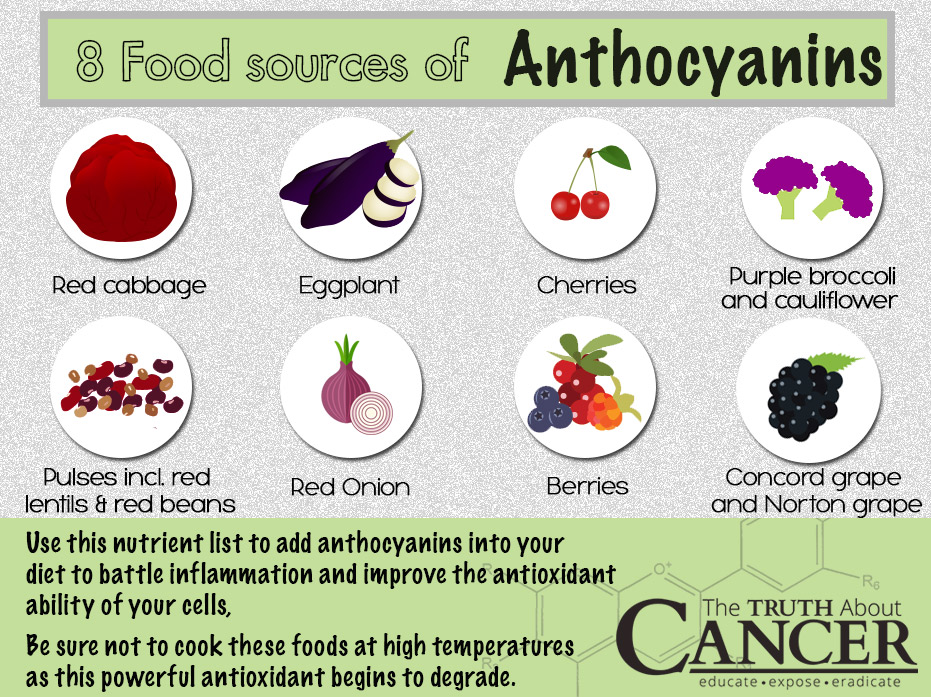
Food-source-Anthocyanins-2

Adding a variety of natural colors into your diet can not only help you battle inflammation and improve the antioxidant ability of your cells, but it will also significantly impact your body’s ability to prevent cancer.
 
There are a variety of ways you can add anthocyanins into your diet.  Prepare a mix of your favorite berries to enjoy with your breakfast.  Red cabbage is an excellent addition to sauerkraut or simply juiced.  Try sautéing or steaming red cabbage, purple cauliflower, purple broccoli, and purple (non-GMO) corn with grass-fed butter and herbs for amazing cancer preventative benefits.  Sweet potatoes are another good source of anthocyanins.

Adding blueberries, blackberries, and raspberries to your smoothies each day is an easy and tasty way to get more anthocyanins.  Bilberries, commonly found as dried fruit, in an extracted powder or in supplemental form also exhibit anti-mutagenic potential.  The research into anthocyanin benefits is promising for anti-cancer therapies because regardless of the availability of fresh berries throughout the year, dried forms can be just as advantageous as a cancer-prevention tool.  Patients with colorectal cancer particularly benefit from berry consumption.

Remember to "Eat the Rainbow"!

Wednesday, June 28, 2017

Wonderful Watermelon

Not only is this deep red fruit with a bright green and white rind an iconic symbol of summer, its refreshing and slightly crunchy, juicy sweetness makes it a favorite of many during the hot months.  I used to mistakenly think that although watermelon was a tasty treat, it didn't offer much in the way of nutrition, because it was all water and sugars.  Watermelon's high water content (almost 92%) does make it a great thirst-quencher, but the 8% of other nutrients is what gives it the "wow-factor."
 
Watermelon is considered a heavy weight for several key antioxidant nutrients.  It contains 21% of the daily recommended value of Vitamin C (immune health),  17% of the daily value of Vitamin A (eye health), vitamin B6 (brain & blood health), and electrolytes like sodium and potassium (fluid balance).  Watermelon is a lycopene powerhouse; in fact, it has the highest concentration of lycopene of any other fresh fruit or vegetable, including tomatoes! 
 
Lycopene is a potent anti-inflammatory, is able to neutralize damaging free radicals, and may also be important for bone health.  Extensive human studies have shown lycopene to be protective against several cancers, including lung, prostate, breast, endometrial, and colorectal cancers.  The amounts of lycopene and other carotenoids actually increase when watermelon is left at room temperature, which is why whole watermelon (and tomatoes) are best stored at room temperature.  Obviously, once they are cut open, they need to be refrigerated.
 
Citrulline is a phytonutrient that the kidneys convert into the amino acid arginine.  Arginine strengthens the heart and circulatory system--it is a precursor of nitric oxide which is important for healthy arteries, blood flow, and general cardiovascular health.
 
It is not uncommon to think that a watermelon's nutrients are most concentrated in the deeper red center, but actually the nutrient content is similar throughout the whole fruit.  The white rind, in fact, has the highest concentration of nutrients.
 
Despite all the concerns about GMOs, there is no need to fear that seedless watermelons are genetically modified--they are actually just a sterile hybrid.
 
Watermelons are in the cucumber family and must be pollinated by honey bees.  A pale or buttery yellow spot on the bottom of a watermelon indicates its ripeness.
 
Although watermelon is probably most commonly eaten in its plain raw state, try using it in smoothies or as "popsicles" (simply stick toothpicks in chunks of watermelon and freeze--so much healthier than sugary popsicles with artificial colors and flavors!).  Here is a recipe for salsa:


Watermelon Salsa (from Eating Well)
3 cups diced watermelon without seeds
2 seeded and minced jalapenos
1/3 cup chopped cilantro
1/4 cup minced red onion
1/4 cup lime juice
1/4 tsp. sea salt (or to taste)
 
Enjoy your watermelon this summer with the knowledge of its health benefits making it an even sweeter treat!

Saturday, June 3, 2017

Natural Skin Cancer Cure

For four summers during my high school/college years, I worked as a lifeguard at an outdoor pool.  Being fair-skinned, I had a lot of sunburns even though I used sunscreen.  As a result of repeated sunburns, I developed many actinic keratoses or AK's (pink, scaly areas on the skin that don't go away and are considered precursors to skin cancer) and several basal cell skin cancers.  Over the years I have made trips to the dermatologist to have the areas frozen with liquid nitrogen or surgically removed in the office.  Most of the time, the liquid nitrogen was not very effective, so I have had some of these spots for years. 
 
After treating my breast cancer naturally, I really wanted to find a natural cure for my skin issues as well.  I tried using several different essential oils topically and only achieved minimal success with frankincense on a few of my smaller AK's.  I was a bit frustrated until recently when I came across Black Salve.  It's an herbal remedy with the main active herb being bloodroot.  I had heard of bloodroot before--Dr. Veronique Desaulnier used bloodroot to draw out a cancerous tumor from her breast instead of having surgery (she is a great resource for treating breast cancer naturally!)--but I had never seen it referenced for skin cancers.  Black Salve came highly recommended from a trusted source, so after reading lots of testimonials and reviews from people who used it for everything from skin cancers to moles to warts, I decided to try it for myself.  I want to pause here and make it clear that anyone who has suspicious moles or freckles, areas on the skin that don't heal or that go away for a while but keep returning, or warts that won't go away would be wise to get them checked by a doctor.  Skin cancer, especially melanoma, isn't to be taken lightly!

Another word of caution is in order regarding the Black Salve itself.  Herbs are very powerful medicine, and the directions that come with the salve need to be followed carefully.  I purchased the exact product shown in the photo in this article on Amazon.com.  There are other brands available as well as online recipes for making your own salve. 
 
Let me share how the process worked.  First of all, it is not recommended to use the salve on your face until you're familiar with how it works.  Most of my spots are around my neck and shoulders.  Using a toothpick or cotton swab, apply a bit of the salve (a very little bit goes a long way) to the spot only, being careful not to spread it on the surrounding skin.  Put some coconut oil or petroleum jelly on the pad of a band-aid to keep it from sticking to the skin, and cover the spot with the band-aid.  Leave the salve on the spot for 24-48 hours.  Then gently wipe off the salve with a cotton ball soaked in hydrogen peroxide.  The spot will sting and burn, but it's very tolerable, and I found it to be equivalent to the stinging/burning of the liquid nitrogen treatment used by my dermatologist.
 
After the salve is wiped off, keep the spot covered with a clean bandaid; it will take 1-6 weeks for the process to complete, depending upon how large or deep the spot is.  The area around the spot will redden, swell, and feel warm to the touch.  The spot itself will develop a whitish ring around the edge and may ooze fluid.  All of these things may cause nervousness that it is infected, but it isn't--it's just the salve working its magic.  After a few days a scab will form--a nasty, ugly, thick scab that is whitish/greenish at first then black.  The "scab" is all of the cancerous cells (or cells of the root of a wart) that are being drawn out of the skin by the salve.  You must keep the spot covered by a clean band-aid until the scab falls off by itself--do NOT pick the scab off!  It will fall off when it's ready--when the salve has finished drawing out the abnormal cells.  (I have included photos at the bottom of this post...if you're squeamish, you may not want to look.)
 
When the scab falls off, there will be an indentation-type wound.  There should be no bleeding unless the scab came off too early.  It heals from the inside out.  I found that the wound looked almost exactly like the wound left after a dermatologist cuts out a skin cancer or surgically removes a mole. 
 
Apparently the salve only "works" on abnormal cells, so if it doesn't remove a freckle or mole, it may be because that freckle/mole is harmless.  Additionally, it may take more than one application to completely remove a large or very deep spot.
 
I have used the salve on six different spots so far.  I'm quite happy with how it has worked, and I feel like I have finally found a natural remedy that is a true cure.
 
A note about sun exposure and skin cancer:  Avoiding sun exposure is not a healthy idea; it actually increases the risk of cancer!  Absorbing Vitamin D from its natural source, sunlight, is vital for a healthy immune system.  Likewise, slathering on sunscreens to prevent burning also increases the risk of cancer, since most sunscreens are full of toxic and carcinogenic chemicals that are readily absorbed into the largest organ of the body--the skin.  Also, sunscreens prevent the body's absorption of Vitamin D, which we need.  The key is to get healthy amounts of daily exposure to sunlight without getting overexposure, or sunburn.  If you're going to be out in the sun all day, allow free sun exposure for some of that time and then use a natural healthy sunscreen or cover up with a hat and lightweight clothing to avoid sunburn.
 
Soak in those rays...just be smart about it!


{PHOTOS BELOW}


                                BEFORE                                                                      SCAB

 
                                 BEFORE                                                    SCAB                                                    


                         SCAB  OFF                                                 HEALING                           


Wednesday, May 10, 2017

Your Pain Killer May Be Killing More Than Your Pain

Acetaminophen, Glutathione, ADHD, autism, heavy metal toxicity, vaccines, and Alzheimers...how are all these things related?  Allow me to connect the dots.

Acetaminophen (the ingredient in Tylenol, other OTC pain relievers, cold and cough remedies, sleep aids, etc.)  is the most common drug ingredient in the U.S., is handed out and consumed like candy, and is widely considered "safe"--yet it is responsible for over 100,000 injuries and deaths per year!  You may have already heard that acetaminophen can cause liver damage, but did you know that it has also been linked to heart toxicity, gastrointestinal bleeding, kidney damage, and increased death rates?  Beyond that, acetaminophen goes directly to the brain, which is what I want to address.  The primary manufacturer of acetaminophen in the U.S. has admitted that acetaminophen has never been shown to be safe for brain development when used during pregnancy or in childhood.  Also, safety testing in children did not include any evaluation of brain function, and no long-term studies were ever conducted.

One of the most concerning problems with acetaminophen is its neurological effects.  Acetaminophen depletes Glutathione, an extremely important and necessary antioxidant for brain health.  This results in neurotoxicity during brain development:  taking acetaminophen during pregnancy results in children with high risks of behavioral, communication, and motor skill problems as well as ADHD- and autism-like symptoms.  (Glutathione is also a vital antioxidant for cancer prevention and treatment.)
 
Glutathione is crucial for heavy metal detoxification.  Mercury and aluminum are two highly neurotoxic heavy metals which are commonly found in fish/seafood, dental amalgam fillings, antiperspirants, aluminum packaging and cookware, and...vaccines.  Despite claims to the contrary, mercury (thimerasol) has NOT been completely removed from vaccines; in fact, it is still used in amounts that blow away the levels considered "safe".  Aluminum is an adjuvant used in vaccines to instigate a strong immune response.  Glutathione is very effective at removing mercury from the body...but aluminum impedes the body's glutathione production, prohibiting it from doing its job.
A very common side effect of vaccination is fever.  Acetaminophen is commonly recommended by doctors and used by parents to treat these fevers.  Do you see the connection?  A child receives vaccines containing heavy metals like mercury and aluminum > the child gets a fever and is given acetaminophen > the acetaminophen goes to the child's brain and depletes glutathione, preventing it from protecting the brain > the dangerous levels of mercury and/or aluminum in the vaccines damage the child's brain.  It's a perfect storm for causing neurological problems like encephalitis, seizures, ADHD, autism, developmental disorders, etc.  Research has shown that male brains are much more susceptible to acetaminophen, which may help explain the prevalence of autism in boys.  This can all be compounded if the mother took acetaminophen during pregnancy, as mentioned previously.  Tylenol or acetaminophen should NEVER be given to children for vaccine-induced fevers.

Heavy metal toxicity, especially aluminum, has also been strongly linked to Alzheimer's disease.  This also makes perfect sense, since aluminum prevents Glutathione from protecting the aging brain.

It may be tempting to simply replace acetaminophen with ibuprofen, aspirin, or other non-steroidal anti-inflammatory drugs (NSAIDS).  However, although NSAIDS do not have the same link to direct neurological damage as acetaminophen, they have their own set of risks including hormonal interference (especially with progesterone and ovulation), cardiovascular problems, hypertension, kidney problems, GI bleeding, and damage to the microbiome in the intestines causing leaky gut--which in turn leads to a host of other physical and psychological problems.  Around 100,000 patients are hospitalized for NSAID-related gastrointestinal complications each year, and conservative estimates list 16,500 NSAID-related deaths per year among arthritis patients alone.
 
Many parents make the mistake of using over-the-counter analgesics every time their child gets a fever.  Fevers in general are protective and should be left alone.  Fever is part of the body's natural response to viruses/bacteria:  fever kills pathogens which cannot survive at high temperatures and slows down their ability to travel and reproduce.  Suppressing fever  suppresses the immune system, which can lead to longer recovery times and worse illnesses down the road.  Childhood fevers have also been shown to be protective against cancer development!  If you must treat a fever, there are many natural herbal remedies, essential oils such as lemon oil and spearmint, and homeopathic remedies available.  Skip the dangerous analgesics!
 
Likewise, natural pain and inflammation remedies are much better options than acetaminophen or NSAIDS.  Curcumin from turmeric is a powerful anti-inflammatory and pain reliever, and essential oils like lavender are effective for headaches.  Of course, a lot of pain and inflammation can be avoided simply by choosing an anti-inflammatory diet and by getting chiropractic care for joint and muscle pain.
 
There are always safer, healthier alternatives to drugs!

Sunday, April 2, 2017

To Vax or Not to Vax

Vaccination is a hot topic with passionate people on both sides of the issue; discussions can be confrontational and uncomfortable, leaving many people feeling they have no option other than to ignore it completely.  This is all very unfortunate, because vaccination is an important, on-going topic that affects everyone, and if we are to be wise stewards of our health and the health of our children, we need to know the facts.

I researched vaccines before the birth of my first child thanks to the advice of my chiropractor at that time, and I am very thankful that my husband and I had our decisions figured out before we started our family.  Since my cancer diagnosis a few years ago, I have learned even more about the connection between vaccines and cancer, and it was eye-opening!

There is a lot of information out there, and it can be hard to know where to start researching.  It can also be very difficult to know what is true, what is not, and whom to trust.  Rather than try to cover the subject of vaccines in this post, I would like to invite you to watch a free online documentary mini-series called The Truth About Vaccines in which the creators explore the topic of vaccination by interviewing over 60 vaccine experts including doctors, scientists, and researchers.  This documentary is made by the people at The Truth About Cancer (they have a website and Facebook page, and they are one of my main resources for cancer information).  I have watched both of their mini-series documentaries about cancer, and I highly recommend their work!  They are professional, honest, balanced, and have a heart for helping others. 

The documentary begins on April 12th at 8:00 Central time (9:00 Eastern time); there will be seven episodes--one episode per night for seven straight days.  Each episode will also be available for 24 hours after it airs.  To watch the mini-series, simply click on the link below to register; you will receive an email confirmation and alerts before each episode starts. 

Here is the link to register: 
https://go.thetruthaboutvaccines.com?ref=02b61f6e-5a07-4b36-8b1e-450cd24d3fc1

The broadcasting schedule is as follows:

Episode 1: The History of Vaccines, Smallpox, Vaccine Safety & the Current CDC Schedule (Airs on Wednesday, April 12th at 9:00 P.M. EDT)

Episode 2: What's in a Vaccine? Are Vaccines Effective?...and...What About Polio? (Airs on April 13th at 9:00 P.M. EDT)

Episode 3: An Analysis of the MMR & DTaP Vaccines & Vaccinating for the Greater Good (Airs on April 14th at 9:00 P.M. EDT)

Episode 4: Examining Influenza, the HIB and Pneumococcal Vaccines & Herd Immunity (Airs on April 15th at 9:00 P.M. EDT)

Episode 5: Considering the HPV and Hepatitis B Vaccines, SIDS & Shaken Baby Syndrome (Airs on April 16th at 9:00 P.M. EDT)

Episode 6: A Closer Look at the CDC, Chicken Pox and Rotaviurs Vaccines & Retroviruses (Airs on April 17th at 9:00 P.M. EDT)

Episode 7: Natural Immunization, Homeoprophylaxis & Fundamental Freedom of Choice (Airs on April 18th at 9:00 P.M. EDT)

Whether you are pro-vaccine, anti-vaccine, or somewhere in the middle, I guarantee that you will find this documentary helpful and informative.  Consider inviting someone to watch with you--it's a great way to learn about a controversial subject in a non-confrontational environment!

Again, the link to register is https://go.thetruthaboutvaccines.com?ref=02b61f6e-5a07-4b36-8b1e-450cd24d3fc1.

Wednesday, March 1, 2017

Survivor

A couple weeks ago I saw a headline that read, "Hugh Jackman Beats Cancer for the Sixth Time!"  Hugh Jackman, a popular Australian actor, recently had another basal cell skin cancer removed from his nose.  My reaction to the headline was, "If he 'beat' cancer, it would not have recurred five times."  To me, this is just one more proof that standard medical cancer treatment is a failure.
 
Did you know that a cancer patient is considered a "survivor" once they have lived for five years after their diagnosis?  Even if they die a few days past the five-year mark, they are still statistically counted as a cancer survivor.  Even if they develop a secondary cancer years later as a direct result of their cancer treatments and die from it, they are counted as a survivor.

Almost four years ago I was diagnosed with Stage II, grade 3 invasive breast cancer.  That diagnosis was the catalyst for my cancer research which eventually led to writing this blog and a newsletter column.  My doctors recommended surgery, radiation, and chemotherapy.  I did have a lumpectomy--surgical removal of the lump in my breast--but I refused surgical removal of lymph nodes, radiation and chemotherapy.  Why?  Initially it was because I had seen the devastation wrought by those treatments and their ultimate failure to cure cancer, and I knew there had to be a better way.  Then, after beginning to research, I soon realized that my instincts were accurate:  there is, indeed, a better way (MANY ways, in fact) to treat and cure cancer.  So that is the path I chose.  I have a passion to share what I have learned, because the majority of people do not even know that there is a world of alternative cancer treatments available that kill cancer while not only maintaining, but improving overall health in the process.  There are better options other than surgery, radiation, and chemotherapy.
 
The most important component in fighting and preventing cancer is a healthy, properly-functioning immune system.  The immune system is perfectly capable of fighting and killing cancer cells on its own when it is functioning properly.  When the immune system is overwhelmed by poor diet; lack of nutrients; inadequate rest, exercise, sun exposure, and time outdoors in nature; over-exposure to product and environmental toxins; too much stress; and too many other unhealthy lifestyle choices, it cannot function optimally--so the body becomes inflamed, and bad things start to happen.  The results of an over-burdened immune system are many and varied and include weight gain, arthritis, allergies, gut and intestinal problems, diabetes, autoimmune issues, unexplained pain, organ problems, and yes, cancer.  The only way to effectively prevent, treat, and beat cancer is to address its cause.  Surgery, radiation, and chemo only address the symptoms of cancer--and they don't even do that very well!
 
Surgery does not stop cancer from spreading.  Surgery can remove a spot or a lump or a bump, but it is extremely unlikely that every single cancer cell is confined to that one spot, lump, or bump.  No matter how careful the surgeon is and how "clean the margins" around the removed area, it is virtually impossible to get every single cancer cell.  Worse, not only does surgery fail to stop cancer from spreading, surgery can be a cause of cancer spreading.  When a doctor cuts into a cancer mass (including when doing a biopsy!), the cancer cells that were contained in the mass are now free to spread to other areas of the body.  Cutting off body parts or cutting out cancerous organs is almost never warranted.  It especially bothers me when women have healthy breasts removed because they are afraid cancer might spread there.  I can't say this enough: removing a breast (or a prostate, or an organ, or part of a limb) will not stop cancer from spreading!  In the case of breast cancer, removing the breasts results in the cancer growing back in much harder-to-treat areas like the chest wall.  Also, surgery--especially very invasive surgeries--causes a lot of trauma to the body to which the immune system must respond.  Healing the body from surgery requires a lot of the immune system's resources, leaving it compromised when it most needs to be at full strength to battle the cancer.
 
Ionizing Radiation causes cancer.  You all know this--it's why x-ray technicians protect themselves and their patients from unnecessary exposure, and why nuclear reactor disasters are...disasters.  Yet radiation is used in conventional medicine to treat cancer.  It doesn't make much sense, does it?  It's like trying to put out a fire by throwing gasoline on it.  Radiation exposure is cumulative, so every x-ray, CT scan, mammogram, and airport security x-ray adds to the amount of radiation accumulated in your body and increases your risk of cancer.  It is not uncommon to hear of cancer patients who have received the maximum allowed lifetime amount of radiation during their cancer treatment and are told they cannot receive any more.  Radiation in the chest or upper back region can damage the heart and lungs. It also has other negative side effects like fatigue and radiation burns--burns which require healing and, again, pull valuable resources of the immune system away from fighting cancer.


Chemotherapy causes cancer.  Perhaps you weren't aware of that?  It's true.  Chemotherapy does kill some cancer cells, but at the same time it mutates other cells into cancer cells.  On top of that, the new cancer cells are resistant to the chemotherapy being used and are stronger and spread faster than the original cancer--which explains the cycle of a chemo drug only working temporarily before it has to be replaced by a different chemo drug. Meanwhile, cancer keeps spreading to more and more areas of the body...and the cycle continues until the doctor informs the patient that they are out of chemotherapy options and there is nothing more they can do.  If that isn't bad enough, the side effects of chemotherapy can be horrific.  Chemo is not a targeted attack on cancer cells; it indiscriminately attacks healthy cells as well, destroying the immune system and wreaking havoc on the body.  Using chemo to treat cancer is like dropping a bomb on your house to eliminate an ant problem.
 

I don't have time in this one post to cover all the things you CAN do to work with your body's intelligently designed systems to prevent and beat cancer naturally, but the one thing everyone can start doing immediately is to change your diet and lifestyle and allow your body to get back to the place where it can work the way it is meant to work.  There is more information on my blog as well as recommended resources that provide more complete information.
 
This is in no way meant to be a criticism of anyone who has undergone standard cancer treatment!  As I stated earlier, many people just do what the doctors tell them because cancer is scary, and they don't even know they have other options.  My purpose is simply to share the news that there are better options, and the hope that a cancer diagnosis does not have to be a death sentence.
 
I don't want to be a cancer survivor who meets an arbitrary timeline after needlessly suffering painfully through failed treatments.  I want to be a survivor who
does the best I can to be a good steward of my body and my health, and leaves the rest in God's hands.

Thursday, January 5, 2017

Bad Yeast Rising

Yeast breads are some of the yummiest foods on the planet--who doesn't love freshly baked bread or warm cinnamon rolls or donuts or pizza?  So good...yet so bad for us!  There is another type of yeast that is so good yet can become so bad, and its name is candidaCandida albicans is a type of yeast that occurs naturally on the skin, intestines, and for women, the vagina.  Under normal circumstances, candida is a harmless fungus which aids in digestion and nutrient absorption, but when it gets out of control and there is yeast overgrowth, all kinds of health problems can result. 

Some conditions as a result of yeast overgrowth include vaginal yeast infections, thrush (a yeast infection in the mouth commonly occurring in infants), toenail fungus, athlete's foot, and jock itch--all of which were familiar.  However, I didn't learn the term "candida" until after I was diagnosed with cancer and started doing my own research.  Cancer cells are very similar to candida fungus cells in appearance as well as in the fact that both kinds of cells feed off sugar, leading some researchers to conclude that cancer cells are actually a type of fungus.  When there is an overproduction of yeast in the intestinal tract, the fungus breaks down the intestinal walls causing leaky gut syndrome.  This results not only in a number of digestive issues, but also in the ability of the fungus as well as other toxins to escape the gut and spread to the blood stream, causing systemic infection throughout the body--including the skin, gut, genitals, mucous membranes, and even the membranes surrounding the brain.  Candidiasis manifests differently in different people--not everyone has the same symptoms.  Since the symptoms are so numerous and varied, and since they can be associated with so many other health problems, it isn't unusual for candidiasis to go ignored and undiagnosed.  Yet candida is a common denominator for many conditions which aren't normally associated with yeast overgrowth.  Many symptoms are listed in the image below; read them and take note of how many apply to you.


There are several possible underlying causes of yeast overgrowth, mainly stemming from the body's systems being rundown or out of balance.  Common contributing factors include an unhealthy diet (high in sugars and grains) which feeds the yeast, diabetes, taking birth control pills, taking antibiotics which kill off the good as well as bad bacteria, using corticosteroids for asthma, and exposure to environmental toxins and stress which negatively impact the immune system.  While it's tempting to take over-the-counter remedies for common yeast infections, we need to understand that those remedies only alleviate the symptoms--they don't address the cause of yeast overgrowth. 

As with most health problems, the primary preventive and treatment is a healthy diet. Alcohol, sugars, grains, conventional dairy, aged cheeses, processed foods, allergenic foods, starchy/high-sugar vegetables (carrots, beets, all potatoes, peas, radishes, parsnips), mushrooms (fungus), peanuts and cashews (ground nuts which commonly carry molds), fruit and fruit juices (high sugar content), and vinegar must all be avoided when trying to treat candida; the fruits and vegetables can be reintroduced after the yeast is under control.  Apple cider vinegar, sauerkraut/fermented foods/cultured dairy (probiotics), green veggies (raw and steamed), green juices, coconut oil (antifungal), unsweetened cranberry juice, garlic, flax/chia seeds, turmeric, cinnamon, Pau D'arco tea, stevia as a sweetener, organic pastured lean meats, and bone broth are all great for fighting candida.  Olive leaf, probiotics, astragulus, vitamin C, grapefruit seed extract, oregano oil, myrrh oil, and lavender oil are good supplements to add.  It's also very important to drink lots of water to carry the candida and toxins out of the body. 

Curing candidiasis may take anywhere from a few weeks to several months depending on how severe the case is, how strictly the proper diet is followed, and the level of probiotic and antifungal intake.  An important note is that when actively treating candida, there will be a period when candida die-off occurs and the body is detoxing, during which symptoms like impaired brain function, headache, fatigue, dizziness, intestinal bloating/gas/constipation and nausea, sweating and fever, sinus infection, skin breakouts, flu-like symptoms may be experienced.  These symptoms should resolve within 7-10 days, after which there should be an increase in energy, focus, and relief of candida symptoms.

If you are experiencing chronic or recurring symptoms from the illustrated list above, I strongly encourage you to look into candida overgrowth as part of the cause.   Search Dr. Josh Axe on the internet and Facebook--he has some great videos